

Tinnitus Sound Therapy Devices: Machines, Apps and Headphones
Compare tinnitus sound therapy devices, sound machines, apps, speakers and headphone players by sound choices, controls, runtime, looping and comfort.
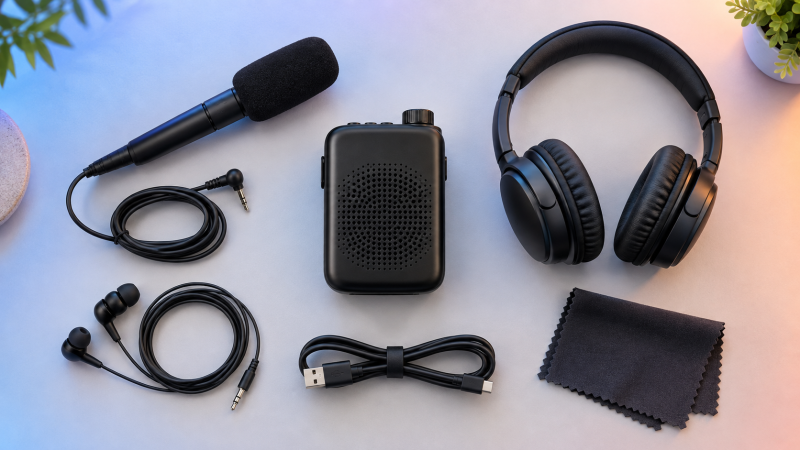
A tinnitus sound therapy device can mean a bedside sound machine, phone app, speaker, wearable sound generator, combination hearing device, or portable headphone player. These formats are not interchangeable. The right comparison starts with where the sound will be used, whether the ears should remain uncovered, and how much control the listener wants.
Here, “device” means the complete listening setup, not just a box with a tinnitus label. A phone plus earbuds, a bedroom speaker, and MAX with headphones solve different practical problems. The comparison below focuses on those differences and keeps clinical systems in a separate category.
Compare tinnitus sound machines, apps, and headphone devices
| Format | Strengths | Check before choosing |
|---|---|---|
| Fan or ordinary radio | Simple environmental background sound | Limited sound selection and less precise control |
| Tabletop sound machine | Keeps the ears uncovered; useful in a bedroom | Sound library, timer, speaker quality, minimum volume, and looping |
| Phone app or streamed audio | Large selection and convenient previews | Notifications, advertising, data connection, battery drain, and short loops |
| Portable headphone player | Private listening, travel use, direct volume control | Headphone comfort, runtime, output compatibility, and included audio |
| Clinician-programmed device | Can be selected and adjusted within an individualized plan | Intended use, fitting pathway, professional follow-up, and cost |
Seven buying criteria that matter more than the label
1. Sound selection
Look beyond a product that simply says “tinnitus sound machine.” Check whether it provides broadband noise, colored noise, nature sounds, music, or custom frequency controls. More sounds are useful only if the listener can switch between them easily.
2. Loop length
A short recording may reveal the same wave, raindrop pattern, or fade every few minutes. That repetition can attract attention. Compare the actual source length, whether tracks cross-fade, and whether playback stops at the end.
3. Volume control
A suitable device should allow a gentle background level. Fine adjustment at the low end can matter more than maximum loudness. Headphone fit and sensitivity also affect the perceived level.
4. Listening format
A speaker lets the ears remain uncovered and can suit a bedroom. Headphones provide privacy and can reduce interference from other room sounds. Earbuds are compact but may not be comfortable for every user or long session. Compare both with our headphones and earbuds guide.
5. Offline use and interruptions
Apps and streaming services may depend on a phone, account, network, or subscription. Check whether calls, alerts, or advertisements interrupt playback. A dedicated local player can avoid those interruptions, while a phone offers a much larger audio library.
6. Battery runtime
For travel or repeated daytime sessions, compare runtime in the exact playback mode. Wireless streaming often uses more power than local audio playback. Charging connector, charge time, and the ability to resume a sound also affect everyday convenience.
7. Accurate product claims
A device that plays fixed noise should not be described as personalized frequency therapy, notched therapy, or a clinician-guided tinnitus retraining program. Check what the hardware actually measures, generates, and adjusts.
Where IROGER MAX fits
IROGER MAX is a portable headphone-based listening device with a built-in sound-masking library. It provides white, pink, brown, and blue noise plus ocean waves, rain, and flowing water. The source contains 37.28 hours of continuous, non-repeating audio before the full program repeats.
- Typical masking-mode runtime: up to 100 hours, depending on volume and conditions.
- Listening connection: compatible 3.5 mm headphones or earbuds.
- Other modes: 65 dB specified maximum hearing-amplifier gain, Bluetooth audio, optional TX input, and 410 mW specified headphone-amplifier output.
- What it does not claim: MAX does not measure tinnitus pitch or generate a personalized notch.
MAX may suit someone who wants a long local sound library, private headphone listening, straightforward controls, and other audio functions in the same unit. A tabletop speaker may be a better format when the ears should remain uncovered, especially at bedtime.
Is a tinnitus relief device the same as a clinical therapy system?
No. Search results mix consumer audio products with devices fitted or used within professional tinnitus programs. A consumer sound player supplies external audio. A clinical system may include hearing assessment, individualized signal settings, counseling, or a defined protocol. Compare intended use and actual features rather than assuming every result provides the same service.
The NIDCD overview lists tabletop and smartphone generators, wearable sound generators, hearing aids for people with hearing loss, and combination devices as different sound-therapy formats. See the NIDCD tinnitus page for that broader overview.
Device FAQ
Is a tinnitus relief sound machine better than an app?
A sound machine can offer simple, interruption-free speaker playback. An app can offer more sounds and customization. Compare the minimum volume, loop quality, offline access, alerts, and the preferred listening format.
Can headphones be used for tinnitus sound therapy?
Headphones can deliver background, masking, or interesting sound, but comfort and volume matter. They also keep playback private. For sleeping, a room speaker or pillow-compatible format may be more comfortable.
Do more sound choices make a device better?
Only if the controls remain easy and the recordings are pleasant. A smaller set of long, well-recorded sounds may be more useful than hundreds of short loops.
What is a tinnitus sound therapy system?
The phrase is broad. It can describe a consumer audio setup or a professionally guided program. Look for the intended use, whether settings are individualized, and what support is included.
Does MAX work without streaming from a phone?
Yes. Its seven masking sounds are stored in the device. Bluetooth is available for other compatible audio, but the built-in masking library does not require a streamed track.
Choose by listening intent
For the concepts behind masking and background sound, read the tinnitus sound therapy guide. To compare the seven sound types, open tinnitus relief sounds. For product specifications, controls, package contents, return terms, and warranty, visit IROGER MAX or contact iRoger.
Reviewed September 13, 2026. The MAX comparison uses current product specifications; general device categories and tinnitus context are based on the NIDCD resource linked above.